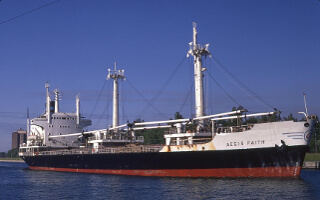
The foundation for this visual database is the work of marine historian Rene Beauchamp who for many years has been compiling an annual list of Seaway salties. In 2004 he published a compiled list of all the salties that had transited the Seaway since it opened; followed in 2009 by 50 Years of Seaway Salties. It is this latter document that this website is based. Please note that this site does not include “lakers” – ships built specifically for Great Lakes and St. Lawrence River use, government and navy vessels, passenger vessels, sailing vessels, barges, dredges or tugboats
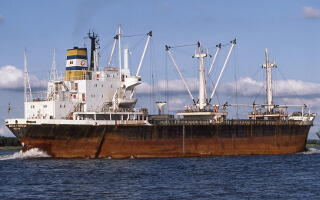
While many of the images of salties were taken by the individuals noted above, their collections extend far beyond a simple photo album. Their collections are a life’s work of accumulating images and other historic materials from friends and photographers, various libraries and museums, shipping companies themselves, and other commercial institutions. For the purposes of this site, all images used are the work of individual photographers, no commercial images have been used. Where source attribution is available, it is shown beneath the photograph; some records remain unavailable.
Explanation:
An alphabetical index is provided and individual ships may be searched for using their name, index number, or in many cases the line they sailed for.
The information provided with each image for the most part comes directly from Rene Beauchamp’s list and includes the following:
- Saltie name (the name the vessel sailed under while transiting the Seaway)
- Gross registered tonnage of the saltie - the gross tonnage the ship had when she transited for the first time. This figure was altered in subsequent trips for several vessels. For shelter deck vessels, the CSD tonnage which is greater than the OSD tonnage has been used. The gross tonnage is broadly, the capacity in cubic feet of the spaces within the hull, and of the enclosed spaces above the deck available for cargo, stores, fuel, passengers and crew, with certain exceptions, divided by 100. Thus 100 cubic feet of capacity is equivalent to 1 gross ton.
- Country of registry of the saltie – based on officially recognized ISO-standard 3-letter abbreviations.
- The year the saltie was built (according to Lloyd’s Register of Shipping or Lloyd’s Shipping Index)
This information has been appended by Viktor Kaczkowski to include the following:
- Index number – 90% of the index numbers shown is the 7-digit number assigned to a particular hull in the International Maritime Organization (a system coming into effect in 1964) and stays with the vessel for its entire lifetime, no matter its name or owner. Other numbers are artificially created for the purpose of indexing the salties included in this project and these numbers are based 6-digit Lloyd’s Registry number (the precursor to the IMO number and applies to those foreign-owned salties that were withdrawn from service prior to 1964) or the vessel’s U.S. or Canadian official number.
- Fleet name – the company the saltie sailed for based on the colours sported in the image provided. This can be very difficult to ascertain due to the numerous subsidiaries, shells companies, flags of convenience used and therefore this information is not always available.
While the site has tried to be comprehensive, as Mr. Beauchamp explains, “Because of lack of information for the very early years of the Seaway, this index does not claim to be a complete accurate list of vessels, but is believed however to be almost one hundred percent accurate. Canallers and other inland vessels sold abroad and reflagged in one of the Great Lakes ports before their departure for overseas are included.”
*Spelling of names:
Several vessels listed were known under a variation of their name, particularly the Soviet ships. Where there are variations in spelling (or punctuation) the name used is that provided by Mr. Beauchamp.